
Internal MedicineCardiovascular Medicine
Atrioventricular block
Atrioventricular block
Disease overview
The human heart's structure is divided into the upper left and right atria and the lower left and right ventricles. Electrical impulses in the heart transmit from the atria in the upper part of the he...
Detailed description
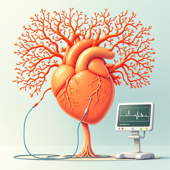
The human heart's structure is divided into the upper left and right atria and the lower left and right ventricles. Electrical impulses in the heart transmit from the atria in the upper part of the heart to the ventricles in the lower part. As the electrical impulses pass through, they trigger myocardial contraction and pump blood, creating a heartbeat.
Atrioventricular block is a condition where the conduction of electrical impulses between the atria and ventricles is slowed or completely stopped.
Atrioventricular block can be classified into first-degree, second-degree, and third-degree blocks, depending on the location and severity.
First-degree atrioventricular block involves only slowed conduction, where all atrial impulses are conducted to the ventricles.
Second-degree atrioventricular block occurs when some atrial impulses fail to conduct to the ventricles (further divided into Mobitz type I and Mobitz type II).
Third-degree atrioventricular block involves a complete failure of conduction to the ventricles, leading to dissociation between atrial and ventricular contractions.
Disease information
Disease name
Atrioventricular block
English name
Atrioventricular block
Category
Internal Medicine
Subcategory
Cardiovascular Medicine
Related departments
Cardiovascular Medicine
98
Related hospitals
120
Related doctors