
Internal MedicineRespiratory and Critical Care Medicine
Interstitial lung disease
Interstitial lung disease
Disease overview
The pulmonary interstitium refers to the lung tissue excluding the lung parenchyma (alveoli and bronchi). It includes connective tissue, lymphatic vessels, nerve fibers, and blood vessels. These tissu...
Detailed description
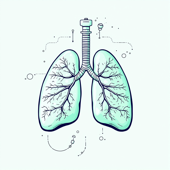
The pulmonary interstitium refers to the lung tissue excluding the lung parenchyma (alveoli and bronchi). It includes connective tissue, lymphatic vessels, nerve fibers, and blood vessels. These tissues are distributed among all parenchymal structures, providing connection, filling, fixation, and nourishment.
Interstitial lung disease is a group of lung diseases primarily affecting the pulmonary interstitium and alveolar spaces, characterized by progressive inflammation and fibrosis.
The most common symptom of interstitial lung disease is shortness of breath, which can worsen over time.
Disease information
Disease name
Interstitial lung disease
English name
Interstitial lung disease
Category
Internal Medicine
Subcategory
Respiratory and Critical Care Medicine
Related departments
Respiratory and Critical Care Medicine
TCM Respiratory Department
60
Related hospitals
63
Related doctors