
Internal MedicineRespiratory and Critical Care Medicine
Pulmonary function test
Pulmonary function test
Disease overview
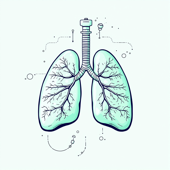
Pulmonary function tests (PFTs) assess the respiratory system's breathing capacity. They primarily measure lung volumes, ventilatory function, gas exchange, and respiratory mechanics.
PFT results can...
Detailed description
Pulmonary function tests (PFTs) assess the respiratory system's breathing capacity. They primarily measure lung volumes, ventilatory function, gas exchange, and respiratory mechanics.
PFT results can be directly measured in some tests or calculated in others.
No single test is sufficient to evaluate lung function, so multiple types of tests are usually required. Some tests may be repeated after the patient inhales an airway dilating medication (bronchodilator).
Types of Pulmonary Function Tests:
Spirometry: This is the most common PFT, measuring breathing volumes and flow rates. It primarily measures forced vital capacity (FVC) and maximal voluntary ventilation (MVV). Forced vital capacity (FVC) refers to the maximum amount of air a patient can exhale with maximum effort and speed after taking the deepest possible breath. Maximal voluntary ventilation (MVV) is the total volume of air a patient can breathe in one minute by repeating voluntary breaths as quickly and deeply as possible, serving as a comprehensive indicator of pulmonary ventilatory reserve.
Bronchial Provocation Test:
This test simulates natural disease conditions, inducing a mild allergic reaction with a small amount of allergen to identify the allergen. It is also known as a "provocation test."
During the test, the patient inhales a fine mist (aerosol) of a substance through a nebulizer mask and mouthpiece. Lung function is measured before, during, and after inhaling the substance.
After the test, the patient is observed for about half an hour to prevent an asthma attack.
Pulmonary Diffusion Capacity Test:
This test measures the amount of oxygen and other gases that pass through the lung air sacs (alveoli) per minute. It helps patients understand how gases are absorbed from the lungs into the bloodstream.
Whole-Body Plethysmography:
This can be used to measure lung volumes. Total lung capacity (TLC) is the total amount of air the lungs can hold. The test requires sitting in a sealed small room. The patient breathes through a mouthpiece while pressure and airflow are collected. Residual volume (RV) is the amount of air remaining in the lungs after exhaling as much as possible. The test requires sitting in the compartment and breathing while the compartment's pressure is monitored. Breathing through a mouthpiece may be required.
Exercise Stress Test:
This test assesses the effect of exercise on the lungs. Spirometry is performed after exercise and then again at rest.
Multiple Breath Nitrogen Washout Technique:
This is one method for assessing small airway function, used to check for cystic fibrosis.
During the test, the patient breathes through a special tube. First, they breathe air containing a tracer gas, then normal air, while the amount of tracer gas exhaled by the patient is monitored.
The test result is the lung clearance index (LCI). A higher LCI value indicates abnormal lung function.
Indications:
Unexplained dyspnea, cough
Diagnosis and assessment of bronchial asthma
Diagnosis and assessment of chronic obstructive pulmonary disease
Evaluation of the effectiveness of medications and other treatments
Assessment of the nature and severity of lung function impairment
Preoperative assessment for thoracic and abdominal surgeries and other surgical procedures
Differentiation of airway obstruction types
Occupational disability assessment
Physical Examination:
The examination may take 5-30 minutes, depending on the number of tests.
Most reports are available in about 1-2 days, with some available in 1-2 hours.
Disease information
Disease name
Pulmonary function test
English name
Pulmonary function test
Category
Internal Medicine
Subcategory
Respiratory and Critical Care Medicine
Related departments
Respiratory and Critical Care Medicine
1
Related hospitals
1
Related doctors