
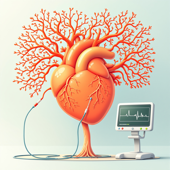
Internal MedicineCardiovascular Medicine
Atrial fibrillation
Disease overview
Atrial fibrillation (AF), often abbreviated as AFib, is a common type of arrhythmia characterized by the loss of regular and organized atrial electrical activity, replaced by rapid and chaotic fibrill...
Detailed description
Atrial fibrillation (AF), often abbreviated as AFib, is a common type of arrhythmia characterized by the loss of regular and organized atrial electrical activity, replaced by rapid and chaotic fibrillatory waves. It represents a severe disturbance of atrial electrical activity, predominantly affecting older adults, and typically manifests as an irregular and rapid heart rate.
It can be primarily categorized into the following types:
First-diagnosed AF: This refers to AF detected for the first time, regardless of other characteristics, and can be any of the subsequent four types.
Paroxysmal AF: AF that lasts for ≤ 7 days (typically ≤ 48 hours) and terminates spontaneously or after treatment.
Persistent AF: AF that lasts for > 7 days and terminates after treatment.
Long-standing persistent AF: AF that has lasted for ≥ 1 year, where the patient desires to restore normal heart rhythm and undergoes appropriate treatment to achieve sinus rhythm.
Permanent AF: AF that has lasted for > 1 year. It cannot be terminated or recurs after termination, and both the physician and patient decide to abandon attempts to restore sinus rhythm.
Disease information
Disease name
Atrial fibrillation
English name
Atrial fibrillation
Category
Internal Medicine
Subcategory
Cardiovascular Medicine
Related departments
Cardiovascular Medicine
65
Related hospitals
119
Related doctors
Data source: SinoMDBLast updated: March 2026
SinoMDB organizes public medical resource data for information reference only. This content is not medical advice, diagnosis, or treatment guidance. Please consult qualified medical professionals before making healthcare decisions.