
SurgeryCardiovascular Surgery
Ebstein's anomaly
Ebstein's anomaly
Disease overview
Ebstein's anomaly, also known as Ebstein's malformation, is a rare and complex congenital heart defect, and the most significant cause of congenital tricuspid regurgitation.
In this condition, the tri...
Detailed description
Ebstein's anomaly, also known as Ebstein's malformation, is a rare and complex congenital heart defect, and the most significant cause of congenital tricuspid regurgitation.
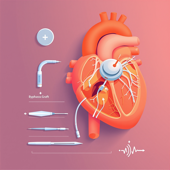
In this condition, the tricuspid valve is displaced into the right ventricle, primarily due to the downward displacement of the septal and posterior leaflets. These leaflets are not at the atrioventricular annulus level but are displaced towards the apex of the right ventricular wall. The anterior leaflet's position is often normal. Consequently, the right ventricle is divided into two chambers: the ventricular chamber above the malformed valve has thin walls and merges with the right atrium to form a large chamber, known as the "atrialized right ventricle," which functions similarly to the right atrium; the chamber below the malformed valve, including the apex and outflow tract, is the "functional right ventricle," which performs the same role as a normal right ventricle but is relatively smaller.
It is often associated with atrial septal defect, ventricular septal defect, patent ductus arteriosus, or pulmonary stenosis or atresia. Increased right atrial pressure may occur, and if an atrial septal defect or patent foramen ovale is present, it can lead to a right-to-left shunt and cyanosis.
Its incidence accounts for 0.5-1% of all congenital heart diseases.
Disease information
Disease name
Ebstein's anomaly
English name
Ebstein's anomaly
Category
Surgery
Subcategory
Cardiovascular Surgery
Related departments
Cardiovascular Surgery
Pediatric Cardiac Surgery
11
Related hospitals
33
Related doctors