
SurgeryCardiovascular Surgery
Corrected transposition of great arteries
Corrected transposition of great arteries
Disease overview
Congenitally corrected transposition of the great arteries (CCTGA) is a type of transposition of the great arteries, characterized by ventriculoarterial discordance along with atrioventricular discord...
Detailed description
Congenitally corrected transposition of the great arteries (CCTGA) is a type of transposition of the great arteries, characterized by ventriculoarterial discordance along with atrioventricular discordance.
The human body has two types of blood circulation: systemic circulation and pulmonary circulation. Normally, systemic circulation follows the path: "left ventricle → aorta → systemic arteries → systemic capillaries → veins → right atrium," and pulmonary circulation follows the path: "right ventricle → pulmonary artery → pulmonary capillaries → pulmonary veins → left atrium." Transposition of the great arteries occurs when the right ventricle connects to the aorta and the left ventricle connects to the pulmonary artery.
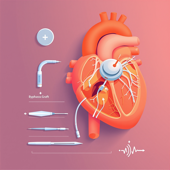
In patients with CCTGA, the anatomical left ventricle is connected to the pulmonary artery and, via the mitral valve, to the anatomical right atrium. The anatomical right ventricle is connected to the aorta and, via the tricuspid valve, to the anatomical left atrium. The anatomical right ventricle supports systemic circulation, while the anatomical left ventricle supports pulmonary circulation.
This condition is clinically rare, and the vast majority of patients also have other intracardiac malformations, such as ventricular septal defect, pulmonary stenosis, and age-related tricuspid valve abnormalities and heart block.
Disease information
Disease name
Corrected transposition of great arteries
English name
Corrected transposition of great arteries
Category
Surgery
Subcategory
Cardiovascular Surgery
Related departments
Cardiovascular Surgery
Pediatric Cardiac Surgery
14
Related hospitals
38
Related doctors